

I feel very lucky to have received some wonderful books for my birthday this year including ‘Walking with Trees’ by Glennie Kindred (one of my favourite authors and nature connectors).
It has inspired me to form an even deeper connection with some of our lovely trees in Britain and I thought it might be nice to share some of my journeying here, starting with Willow a beloved tree all year round, but particularly special in Spring.
Willows are one of the first trees to grow in Spring, symbolising regeneration, new beginnings and letting go of the old.
There are over 400 species of willow worldwide but the most common in the UK are White Willow, Goat Willow, Crack Willow and Common Osiers or basket willow.
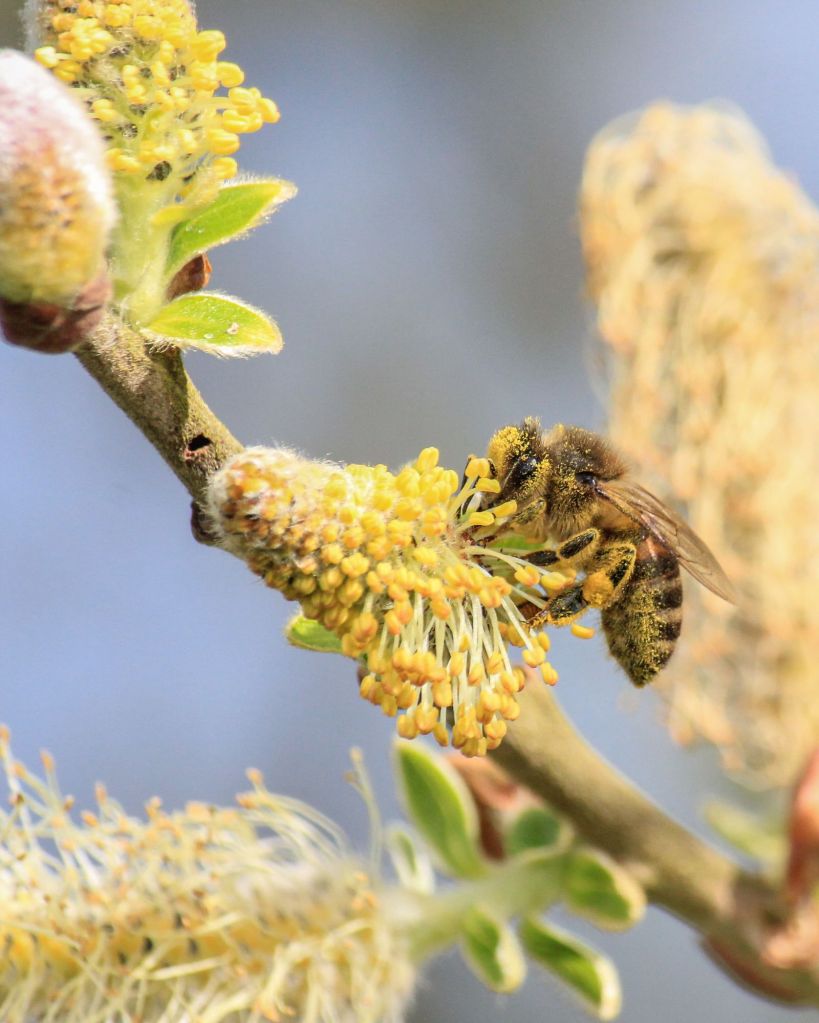
The trees are dioecious meaning they grow male and female flowers on separate trees. The striking ‘Pussy Willow’ catkins open into beautiful yellow male flowers of Goat or Grey Willows (these species are very similar and often hybridise so can be difficult to tell apart). The female flowers develop on different trees along with the leaves later in the Spring. Both the flowers and leaves are very important nectar and food source for many insects throughout the year.
It is thought that the the words ‘Wicca’ and ‘Witch’ were derived from the word ‘Willow’ and the tree has many ancient associations with healing, rituals and magic.
Traditionally Willow has been used as a pain relief, with the bark containing salicin, from which Aspirin was derived in 1899.
Willow trees are associated with the Moon and the water element. I love to include it in any rituals connected with the Moon, releasing stuck emotions, old energy, welcoming the new, connecting with our intuition, welcoming Spring, emotional healing, and lifting the spirits.
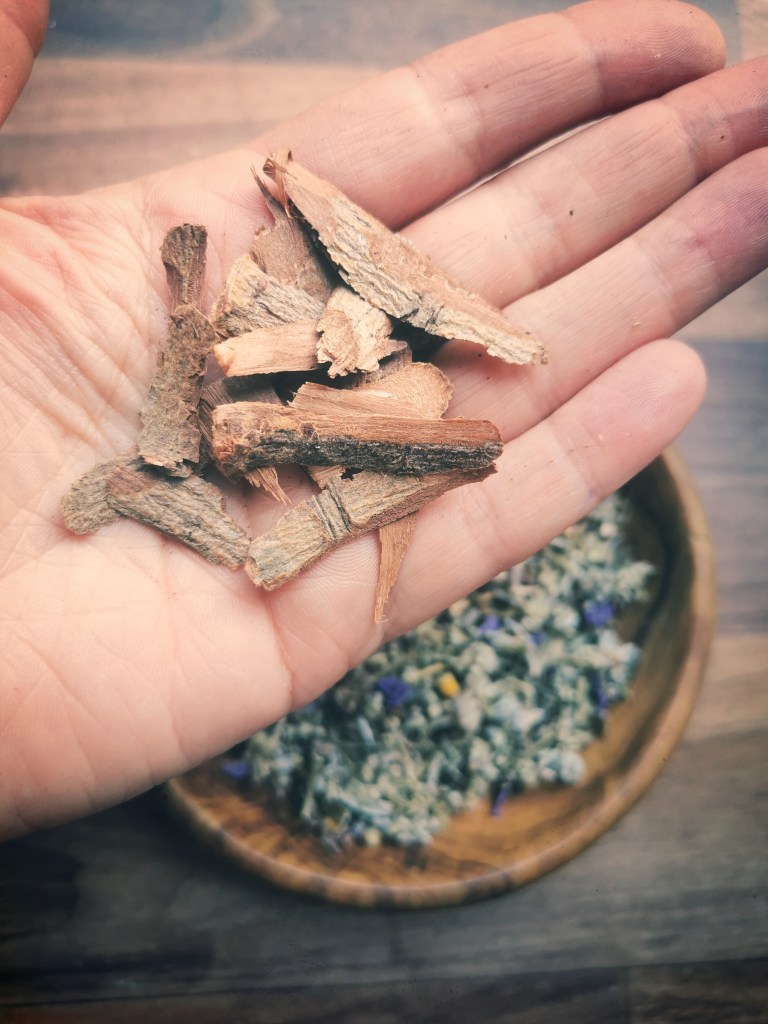
I like to burn both the bark (respectfully gathered from windfallen branches) and leaves as incense.
Traditionally, willow leaf infusions have been used for sore throats, tooth ache and helping to eliminate toxins from the body. The bark is used in treatments for rheumatism, muscle aches and stiffness and indigestion. As with any herbal remedy, it is essential to ensure it suits us individually, making ourselves aware first of any potential contraindications.

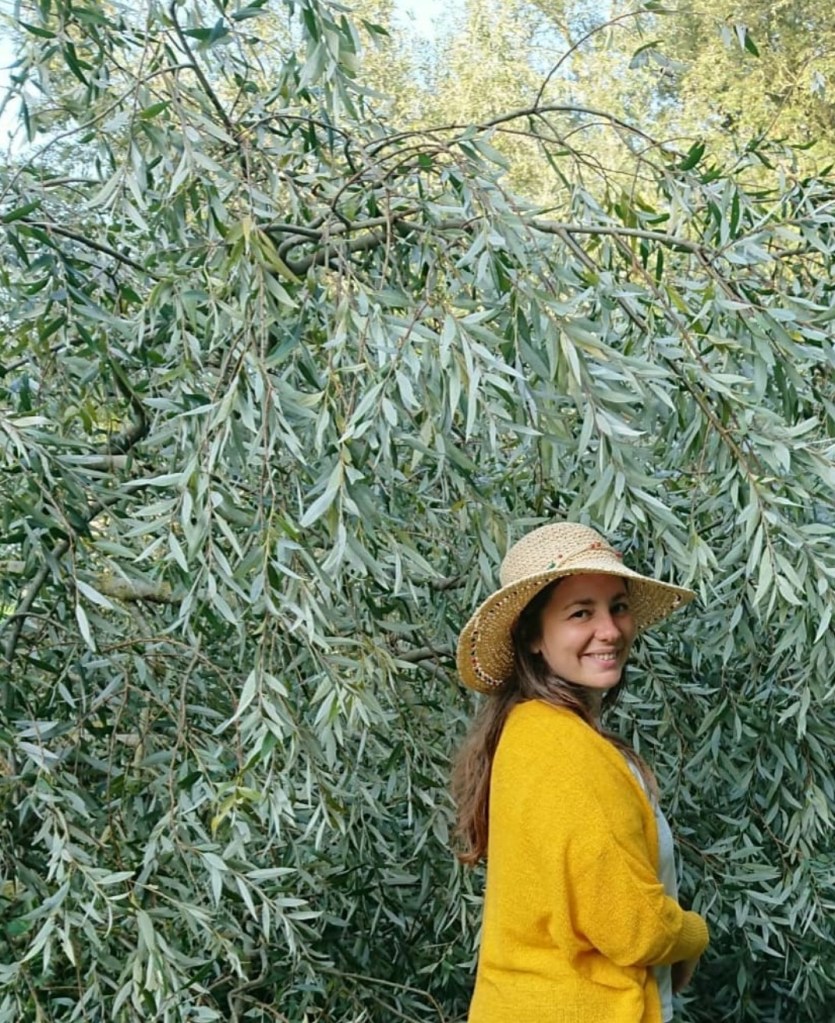
Willow is a wonderful tree to get to know. Growing besides the water, she always offers a seat of peace beneath her branches to soften and watch the world go by.
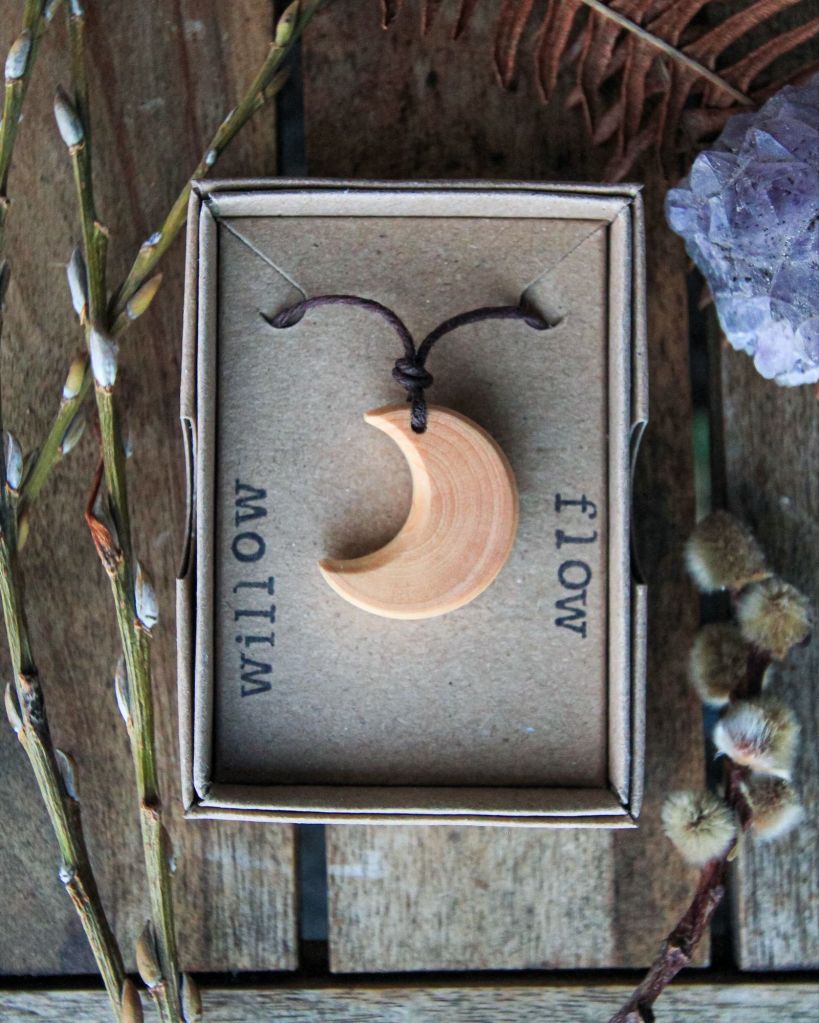
We have loved creating Willow Moon pendants from her pale wood and make these to order from windfallen white willow wood. You can find out more about our Wild Jewellery here.

I would love to hear about your own experiences with Willow magic. If you enjoyed this post, you may also enjoy; tree guides for spring, walking with trees and tree guides for embracing change.
With love & tree magic,
Nic x
To receive posts like this to your inbox, we would love you to join our mailing list:
Discover more from Wild Fen
Subscribe to get the latest posts sent to your email.
 Wild Fen
3 thoughts on “The Magic of Willow”